-
Staffing
Staffing refers to tasks related to maintaining work coverage during the current schedule period, especially in the current 24-hour period (Today/Tomorrow).
1:44
-
Coverage
Coverage refers to the amount and type(s) of employees required in a specific location and time to accomplish the anticipated workload.
2:21
-
Schedule Engines
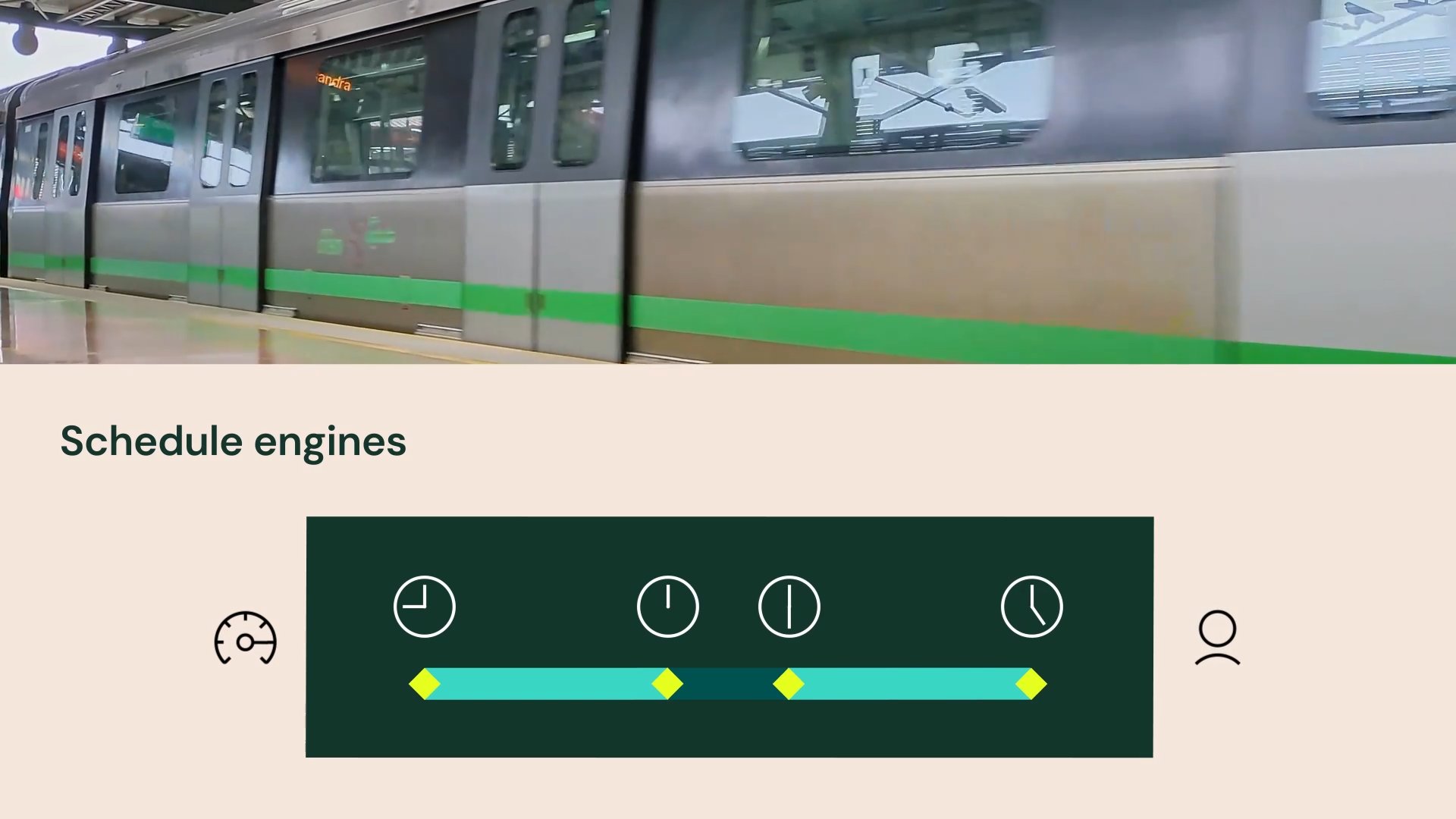
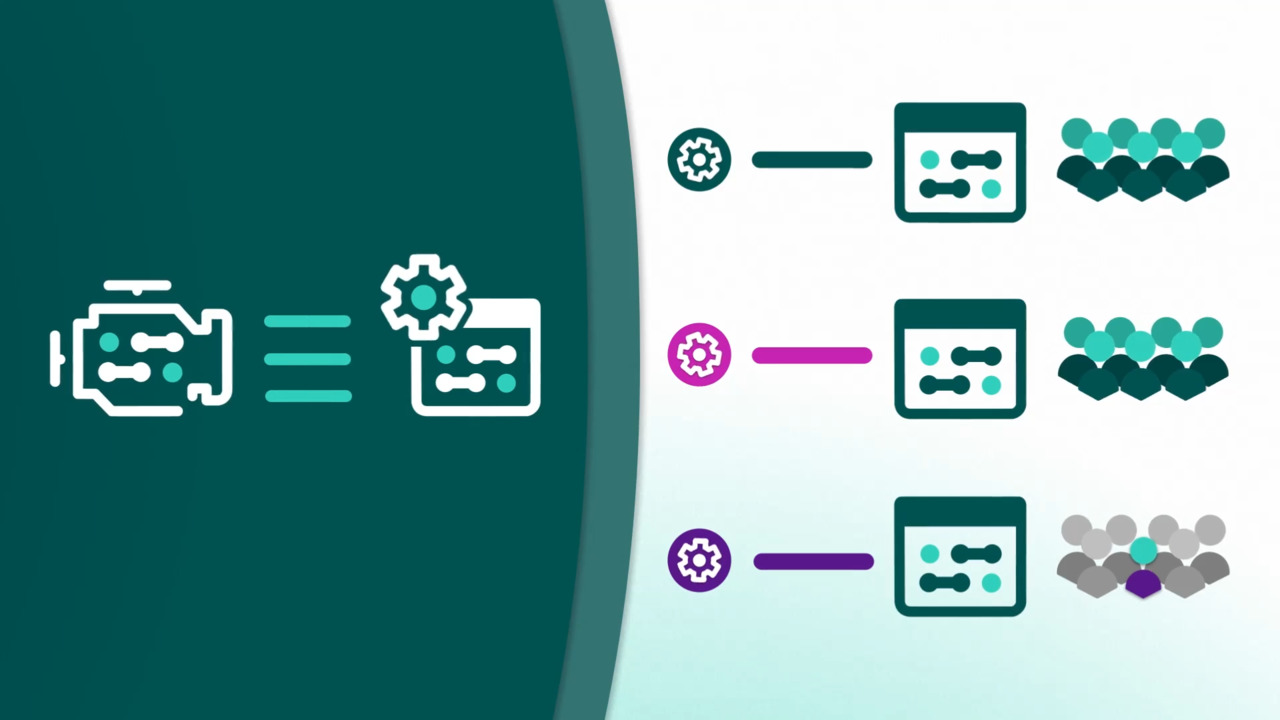
Organizations can use schedule engines to automatically create schedules based on their unique business needs. Depending on the solution, these tools may also be called a schedule generator, auto scheduler, or priority scheduling engine.
1:14
-
Schedule Rules, Constraints, and Violations
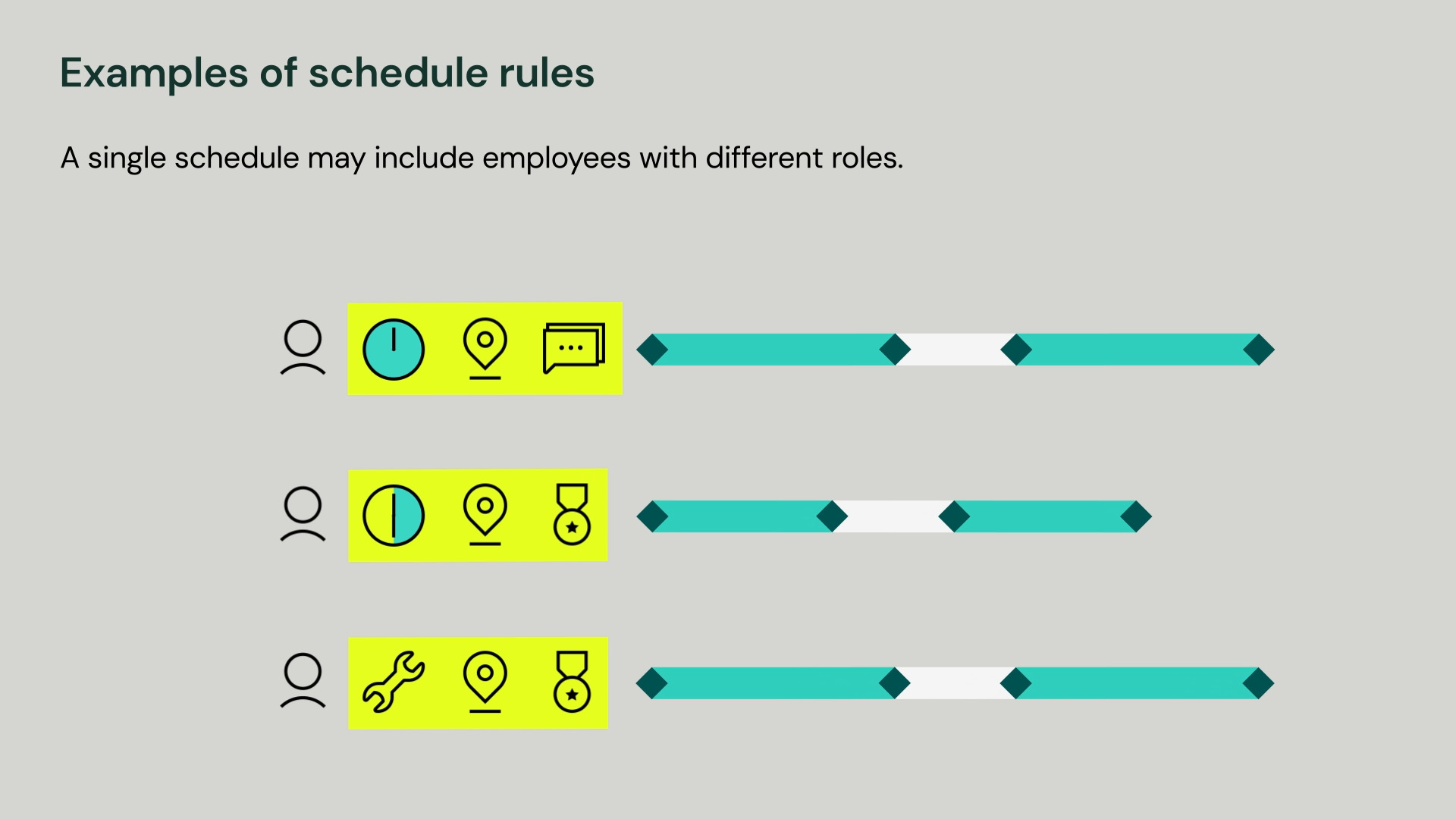
Schedule rules are guidelines organizations enforce within employee schedules. These rules can come from company policies, union agreements, or legal regulations, and may apply to employees, locations, or the schedule itself.
1:40
-
Schedule Rule Severity Levels
When organizations use schedule rules to monitor compliance with scheduling policies and practices, each rule has a severity level that determines the rule’s importance.
1:29
-
Cover Requests
A cover request is a type of employee scheduling request that allows an employee to ask another employee to work their shift for them, without trading shifts.
1:38
-
School Calendars
School calendars identify when school is in session and minor rules are honored for each age group.
1:21
-
Call Lists
When employees call out sick, or an unexpected need to cover extra shifts comes up in the schedule, managers and staffing officers need to identify and contact available employees quickly.
2:18

UKG Concepts Video Gallery